| Manual I |
1 |
|
Open Diapason |
8 |
|
| |
2 |
|
Stopped Diapason |
8 |
|
| |
3 |
|
Principal |
4 |
|
| |
4 |
|
Fifteenth |
2 |
|
| |
5 |
|
Mixture |
III |
|
| |
i |
|
Manual II to Manual I |
|
|
| |
|
|
|
|
|
| Manual I |
6 |
|
Chimney Flute |
8 |
|
| |
7 |
|
Flute |
4 |
|
| |
8 |
|
Gemshorn |
2 |
|
| |
9 |
|
Sesquialtera |
II |
|
| |
|
|
|
|
|
| Pedal |
10 |
|
Subbass |
16 |
|
| |
ii |
|
Manual I to Pedal |
|
|
| |
iii |
|
Manual II to Pedal |
|
|
| |
|
|
|
|
|
Tracker key action : Mechanical stop action : Slider soundboards
> click here to view main image of Headington Quarry organ
The casework of this organ is painted in subtle shades of grey and green with touches of red and gilding on the front pipe mouths, impost and carvings. In contrast, the console is of polished oak, with key coverings of boxwood and ebony. The carvings by Derek Riley depict angels sounding trumpets, and take their inspiration from nearby stonework.
The design of the organ is very compact: all the manual pipes are arranged on a common soundboard with the eight foot stops sharing a common bass, and the Subbass pipes stand on a separate chest behind the main case. Open metal pipes are cut to length and cone tuned, while the flutes have soldered tops and flexible ears for tuning.
The consultant to the church was Dr John Rowntree.
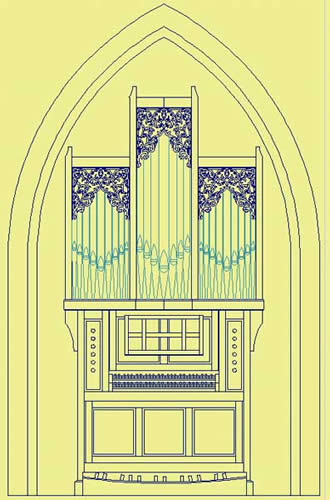
a preliminary proposal for the organ casework

)
